Students who have passed Karnataka 2nd PUC/ 12th Std, / 10+2 / Intermediate or equivalent exam with Physics & Mathematics along with Chemistry/ Computer Science / Biology and any other optional subject with English as one of the languages of study and should have obtained a minimum of 45% marks. For SC/ST & other backward classes of Karnataka students only, the minimum marks is 40% in aggregate in the optional subjects in the qualifying examination, irrespective of marks obtained in the Common Entrance Test / COMED-K/ AIEEE.(Eligibility as per the Govt. Norms from time to time.)
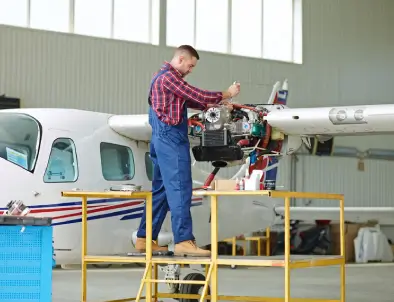
Graduates with a B.E. in Mechanical Engineering have a wide range of career opportunities across multiple sectors. Core engineering roles include design, production, and maintenance, with prospects in the automotive, aerospace, energy, and manufacturing industries. Government career options include the Indian Engineering Services (IES), positions in Public Sector Undertakings (PSUs), and roles within defense organizations. Additionally, graduates can explore consulting, management, and emerging fields such as artificial intelligence, data analytics, and 3D printing. Opportunities for further studies, including M.E., MBA, or Ph.D. programs, as well as paths in entrepreneurship, also open doors for specialization and innovation.
Aerospace Engineer
Design Engineer
Manufacturing Engineering
Automobile Engineer
Program Fees
Duration
4 Years
Program
Mechanical Engineering
Type
SNQ
CET
COMED-K
MANAGEMENT
Amount
Rs. 46,360/-
Rs. 1,22,495/-
Rs. 3,070,87/-
Rs. 1,50,000/-
Admission Process
Students who have passed Karnataka 2nd PUC / 12th std / 10+2 / Intermediate or equivalent exam with Physics & Mathematics along with Chemistry / Computer Science / Biology and any other optional subject with English as one of the languages of study and should have obtained a minimum of 45% marks.
For SC/ST & Other backward classes of Karnataka students only, the minimum marks is 40% in aggregate in the optional subjects in the qualifying examination, irrespective of marks obtained in the Common Entrance Test / COMED-K / AIEEE / any other equivalent entrance examinations. (Eligibility as per the Govt. Norms from time to time).
Programme Educational Objectives (PEOs)
PEO-1
To make graduates self-sustained by exploring engineering problems with innovative ideas to tackle real-time issues.
PEO-2
To make graduates aware of the significance of competence in core engineering concepts to adopt good ethical and leadership qualities.
PEO-3
To inculcate the graduates to pursue lifelong learning processes.
Program outcomes (POs)
PO 1
Engineering Knowledge
Apply knowledge of mathematics, natural science, computing, engineering fundamentals and an engineering specialization as specified in WK1 to WK4 respectively to develop to the solution of complex engineering problems.
PO 2
Problem Analysis
Identify, formulate, review research literature and analyze complex engineering problems reaching substantiated conclusions with consideration for sustainable development. (WK1 to WK4)
PO 3
Design/Development of Solutions
Design creative solutions for complex engineering problems and design/develop systems/components/processes to meet identified needs with consideration for the public health and safety, whole-life cost, net zero carbon, culture, society and environment as required. (WK5)
PO 4
Conduct Investigations of Complex Problems
Conduct investigations of complex engineering problems using research-based knowledge including design of experiments, modelling, analysis & interpretation of data to provide valid conclusions. (WK8).
PO 5
Engineering Tool Usage
Create, select and apply appropriate techniques, resources and modern engineering & IT tools, including prediction and modelling recognizing their limitations to solve complex engineering problems. (WK2 and WK6)
PO 6
The Engineer and The World
Analyze and evaluate societal and environmental aspects while solving complex engineering problems for its impact on sustainability with reference to economy, health, safety, legal framework, culture and environment. (WK1, WK5, and WK7).
PO 7
Ethics
Apply ethical principles and commit to professional ethics, human values, diversity and inclusion; adhere to national & international laws. (WK9)
PO 8
Individual and Collaborative Team work
Function effectively as an individual, and as a member or leader in diverse/multi-disciplinary teams.
PO 9
Communication
Communicate effectively and inclusively within the engineering community and society at large, such as being able to comprehend and write effective reports and design documentation, make effective presentations considering cultural, language, and learning differences
PO 10
Project Management and Finance
Apply knowledge and understanding of engineering management principles and economic decision-making and apply these to one’s own work, as a member and leader in a team, and to manage projects and in multidisciplinary environments.
PO 11
Life-Long Learning
Recognize the need for, and have the preparation and ability for i) independent and life-long learning ii) adaptability to new and emerging technologies and iii) critical thinking in the broadest context of technological change. (WK8)
Programme Specific Outcomes
PSO 1
Ability to utilize their knowledge in Mechanical Engineering Sciences on an applied basis.
PSO 2
Ability to apply learned principles to the analysis, design, development and implementation to more advanced mechanical systems or processes.
Program Curriculum 2022 Scheme
Sl No
Course code
Course Name
1
22MATS11
Mathematics for CSE Stream-I
2
22PHYS12
Physics for CSE stream
3
22POP13
Principles of Programming Using C
4
22ESC14x
Engineering Science Course-I
5
22ETC15x
Emerging Technology Course-I
Or
22PLC15x
Programming Languages Course-I
6
22ENG16
Communicative English
7
22KSK17
22KBK17
Samskrutika Kannada/ Balake Kannada
Or
20ICO17
Indian Constitution
8
22IDT18
Innovation and Design Thinking
Or
22SFH18
Scientific Foundations of Health
Sl No
Course code
Course Name
1
22MATS21
Mathematics for CSE Stream -II
2
22PHYS22
Physics for CSE Stream
3
22POP23
Principles of Programming Using C
4
22ESC24x
Engineering Science Course-II
5
22ETC25x
Programming Language Course-II
Or
22PLC25x
Emerging Technology Course-II
6
22PWS26
Professional Writing Skills in English
7
22KSK27
22KBK27
Samskrutika Kannada/ Balake Kannada
Or
20ICO27
Indian Constitution
8
22IDT28
Innovation and Design Thinking
Or
22SFH28
Scientific Foundations of Health
Sl No
Course code
Course Name
1
22XX31/22B B31
Biology for Engineers / Applied Mathematics
2
22ME32
PTI+F&F Lab
3
22ME33
MSM + Lab
4
22ME34
MOM
5
22MEL35
CAMD
6
22ME361
ESC/ETC/PLC BTD
7
22SC37
Social Connect and Responsibility
8
22AME381
Ability Enhancement Course/SkillEnhancement Course – III
Introduction to Electric Vehicle
9
22NS39
National Service Scheme (NSS)
22PE39
Physical Education (PE) (Sports and
Athletics)
22YO39
Yoga
Engineering Science Course(ESC/ETC/PLC)
22ME361
BTD
22AME381
Introduction to Electric Vehicle
Sl No
Course code
Course Name
1
22XX41/ 22BB41
Applied Mathematics for The Program /Biology for Engineers
2
22ME42
MMM + Lab
3
22ME43
FM + Lab
4
22ME44
PT II
5
22MEL45
M/c Shop Lab
6
22ME462
ESC/ETC/PLC ATD
7
22SS47
Ability Enhancement Course/Skill Enhancement Course- IV Soft Skills
8
22UH48
Universal human values course
9
22NS49
National Service Scheme (NSS)
22PE49
Physical Education (PE) (Sports and Athletics)
22YO49
Yoga
Ability Enhancement Course
22SS47
Softy Skills
Engineering Science Course (ESC/ETC/PLC)
22ME462
ATD
Sl No
Course code
Course Name
1
22ME51
Industrial Management &
Entrepreneur-ship
2
22ME52
Turbo machines
3
22ME53
DME 1
4
22MEL54
Design lab
5
22ME55X
Professional elective - 1
6
22MEMN56
MINI Project Work
7
22ADA57
Advanced Aptitude
8
22ES58
Environmental Studies
9
22NS/PE/ YO59
NSS/ PE/YOGA
Professional Elective Courses
01
22ME551
Theory of Machines
02
22ME552
Fluid Power Engineering
03
22ME553
Composite Materials
04
22ME554
Non Traditional methods
Sl No
Course code
Course Name
1
22ME61
Heat Transfer
2
22ME62
DME 2
3
21ME63X
Professional Elective - 2
4
21ME64X
Open Elective
5
22MEP65
Project Phase 1
6
22MEL66
Engine Lab
7
22RM67
Research Methodology
8
22NS/PE/YO68
MC
Professional Elective – 2
01
22ME631
Mechatronics
02
22ME632
Refrigeration & air conditioning
03
22ME633
Additive manufacturing
04
22ME634
Production & operation management
Open Elective
01
21ME641
Energy Engineering
02
21ME642
Additive Manufacturing
03
21ME643
Supply Chain Management
04
21ME644
Financial Management
Sl No
Course code
Course Name
1
22ME71
Finite Element Methods
2
22ME72
Computer Integrated Manufacturing
3
22ME73
Mechanical Vibrations
4
22ME74X
Professional Elective Course
5
22ME75X
Open Elective Course
6
22MEP76
Major Project Phase-II
PROFESSIONAL ELECTIVE
01
22ME741
Automobile Engineering
02
22ME742
Production Planning And Control
03
22ME743
Total Quality Management
04
22ME744
Operations Research
05
22ME745
Control Engineering
06
22ME746
Micro-Electro Mechanical Systems
Open Elective Courses offered to Other Departments
01
22ME751
Automatic Control Systems
02
22ME752
Smart Materials
03
22ME753
Automation & Robotics
04
22ME754
Statistical Quality Control
05
22ME755
Operation Research
1
22ME81X
Professional Elective
2
22ME82X
Open Elective
3
22MEINT83
Internship (Industry / Research)
PROFESSIONAL ELECTIVE
01
22ME81 1
Tribology
02
22ME81 2
Industrial Safety
03
22ME81 3
Financial Management
04
22ME81 4
Supply Chain Management
05
22ME81 5
Artificial Intelligence For Mechanical Engineering
06
22ME81 6
Computational Fluid Dynamics
Open Elective Courses offered to Other Departments
01
22ME82 1
Non-Conventional Energy Sources
02
22ME82 2
Production Planning & Control
03
22ME82 3
Project Management
04
22ME82 4
Organizational Behaviour
Sl No
Course code
Course Name
1
22ME81X
Professional Elective
2
22ME82X
Open Elective
3
22MEINT83
Internship (Industry / Research)
PROFESSIONAL ELECTIVE
01
22ME811
Tribology
02
22ME812
Industrial Safety
03
22ME813
Financial Management
04
22ME814
Supply Chain Management
05
22ME815
Artificial Intelligence For Mechanical Engineering
06
22ME816
Computational Fluid Dynamics
Open Elective Courses offered to Other Departments
After the announcement of the reopening date of the college, the candidates have to register for the admission with an application enclosing all the photos copies of previous semesters marks card/s through their department HOD and they have to pay the applicable Tuition Fees / Registration Fees within a week of reopening the institute for class work.
The students who fail to register within the first week of re-opening, the student will be charged a penalty
The names of the students will be deleted; in case they fail to register as per the schedule
Any financial matters are required to be referred to the principal only
Once the student is admitted he/she will be under the guidance of the department and all the academic matters should be addressed through the Head of the department only.
Students are expected to maintain discipline in the college campus & not to indulge in “Ragging Activities”.


















.webp)


