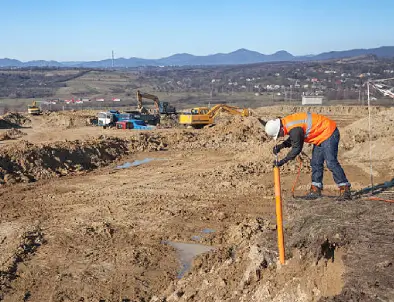
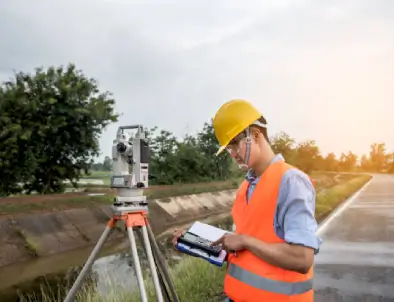
The Bachelor of Engineering (B.E.) course in Civil Engineering is a 4-year professional undergraduate program that provides an intellectual foundation and understanding of the fundamentals of all the core civil engineering disciplines, preparing the students to opt for diversified careers in engineering, technology, project management, and entrepreneurship/firms. The program caters civil engineering students to acquire core skills.
Civil engineering is a continuously evolving field with new technologies, concepts, and materials being developed daily. The scope of Civil engineering is vast, with opportunities ranging from design CADD drawings to building structures, construction engineering, 3D elevations, irrigation engineering, PWD sector, bridge engineering, tunnel and railway engineering and many more. There is immense scope for civil engineers, and it is expected to keep growing alongside with the development of infrastructure in day-to-day life.
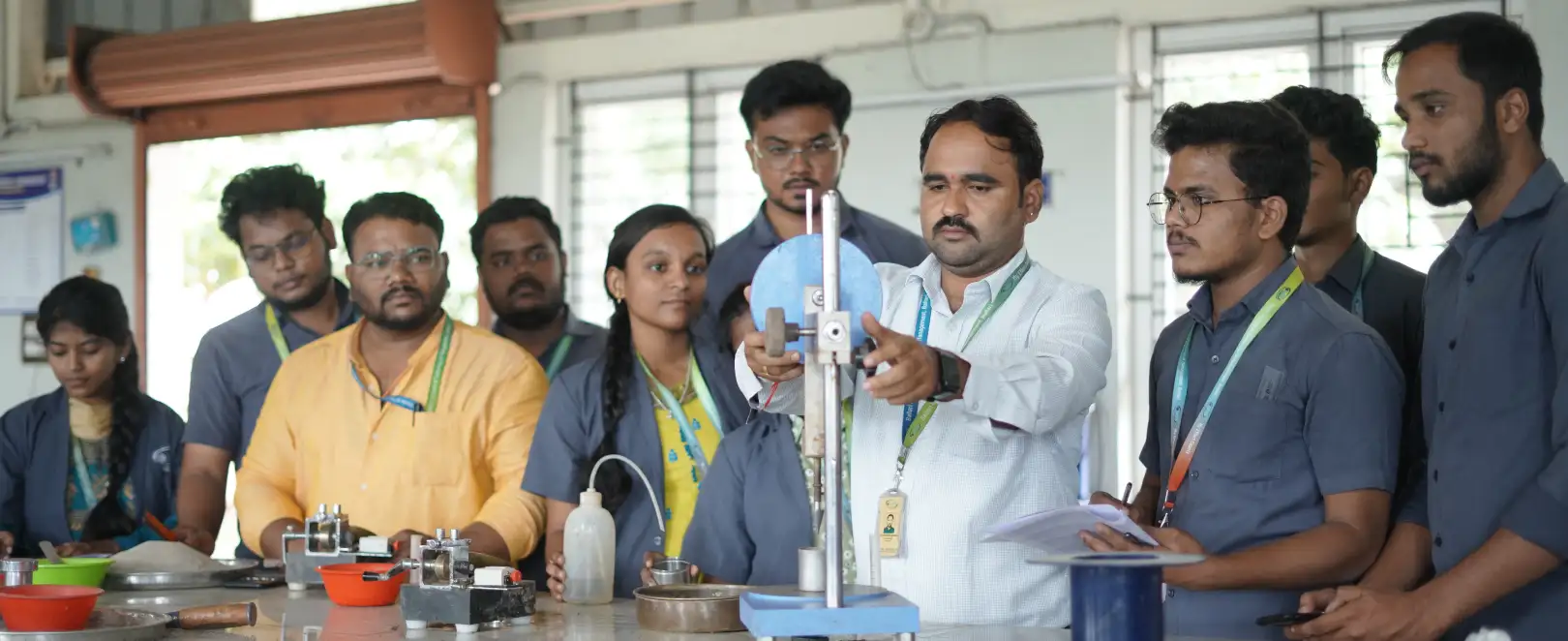
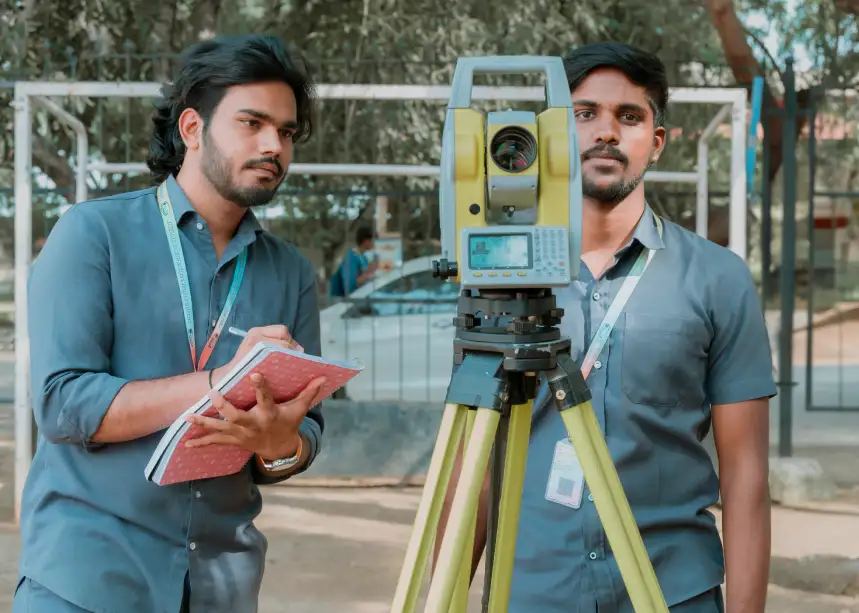
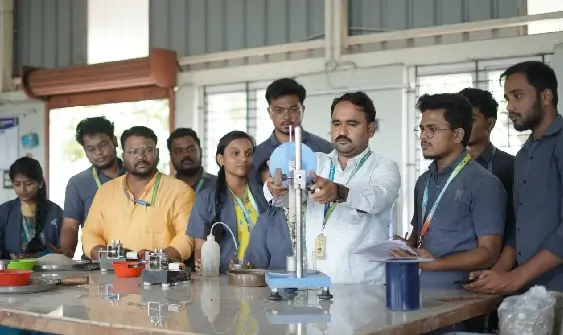
The department is one of the most popular engineering branches in the college equipped with state of art laboratory facilities like concrete and highway material testing, advanced surveying, geotechnical engineering, building material testing, geology, computer aided design and drawing, environmental engineering and fluid mechanic laboratories. The department has a good blend of experienced and highly qualified faculty.
The Department has an intake of 60 students from the academic year 2022-23 and is accredited with NAAC, and NBA and is certified by ISO-9001:2015.
Eligibility Criteria
Students who have passed Karnataka 2nd PUC/ 12th Std, / 10+2 / Intermediate or equivalent exam with Physics & Mathematics along with Chemistry/ Computer Science / Biology and any other optional subject with English as one of the languages of study and should have obtained a minimum of 45% marks. For SC/ST & other backward classes of Karnataka students only, the minimum marks is 40% in aggregate in the optional subjects in the qualifying examination, irrespective of marks obtained in the Common Entrance Test / COMED-K/ AIEEE.
(Eligibility as per the Govt. Norms from time to time.)
A degree in Civil Engineering opens up a wide range of career opportunities across various sectors.
Construction Engineer
Geotechnical Engineer
Irrigation Board
Site Engineer
Civil Contractor
Program Fees
Duration
4 Years
Program
Civil Engineering
Type
SNQ
CET
COMED-K
MANAGEMENT
Amount
Rs. 46,360/-
Rs. 1,22,495/-
Rs. 3,070,87/-
Rs. 1,50,000/-
Admission Process
Students who have passed Karnataka 2nd PUC / 12th std / 10+2 / Intermediate or equivalent exam with Physics & Mathematics along with Chemistry / Computer Science / Biology and any other optional subject with English as one of the languages of study and should have obtained a minimum of 45% marks.
For SC/ST & Other backward classes of Karnataka students only, the minimum marks is 40% in aggregate in the optional subjects in the qualifying examination, irrespective of marks obtained in the Common Entrance Test / COMED-K / AIEEE / any other equivalent entrance examinations. (Eligibility as per the Govt. Norms from time to time).
Programme Educational Objectives (PEOs)
PEO-1
To develop graduates with strong knowledge of civil engineering to excel in their professional careers.
PEO-2
To acquire the necessary skills with leadership qualities, ethics, and values that meet the needs of industry and society.
PEO-3
To engage in lifelong learning for professional enrichment and career advancement
Program outcomes (POs)
PO 1
Engineering Knowledge
Apply knowledge of mathematics, natural science, computing, engineering fundamentals and an engineering specialization as specified in WK1 to WK4 respectively to develop to the solution of complex engineering problems.
PO 2
Problem Analysis
Identify, formulate, review research literature and analyze complex engineering problems reaching substantiated conclusions with consideration for sustainable development. (WK1 to WK4)
PO 3
Design/Development of Solutions
Design creative solutions for complex engineering problems and design/develop systems/components/processes to meet identified needs with consideration for the public health and safety, whole-life cost, net zero carbon, culture, society and environment as required. (WK5)
PO 4
Conduct Investigations of Complex Problems
Conduct investigations of complex engineering problems using research-based knowledge including design of experiments, modelling, analysis & interpretation of data to provide valid conclusions. (WK8).
PO 5
Engineering Tool Usage
Create, select and apply appropriate techniques, resources and modern engineering & IT tools, including prediction and modelling recognizing their limitations to solve complex engineering problems. (WK2 and WK6)
PO 6
The Engineer and The World
Analyze and evaluate societal and environmental aspects while solving complex engineering problems for its impact on sustainability with reference to economy, health, safety, legal framework, culture and environment. (WK1, WK5, and WK7).
PO 7
Ethics
Apply ethical principles and commit to professional ethics, human values, diversity and inclusion; adhere to national & international laws. (WK9)
PO 8
Individual and Collaborative Team work
Function effectively as an individual, and as a member or leader in diverse/multi-disciplinary teams.
PO 9
Communication
Communicate effectively and inclusively within the engineering community and society at large, such as being able to comprehend and write effective reports and design documentation, make effective presentations considering cultural, language, and learning differences
PO 10
Project Management and Finance
Apply knowledge and understanding of engineering management principles and economic decision-making and apply these to one’s own work, as a member and leader in a team, and to manage projects and in multidisciplinary environments.
PO 11
Life-Long Learning
Recognize the need for, and have the preparation and ability for i) independent and life-long learning ii) adaptability to new and emerging technologies and iii) critical thinking in the broadest context of technological change. (WK8)
Programme Specific Outcomes
PSO 1
Graduates will be able to plan, analyze, and design Civil Engineering Structures by utilizing natural resources effectively.
PSO 2
Graduates will be able to apply their Civil Engineering knowledge in the new age construction methods and Techniques to solve real life problems.
Program Curriculum 2022 Scheme
Sl No
Course code
Course Name
1
22MATC11
Mathematics for Civil Engg stream-I
2
22PHYC12
Physics for Civil Engg Stream
3
22CIV13
Engineering Mechanics
4
22ESC14x
Engineering Science Course-I
5
22ETC15x
Emerging Technology Course-I
Or
22PLC15x
Programming Language Course-I
6
22ENG16
Communicative English
7
22KSK17/ 22KBK17
Samskrutika Kannada/ Balake Kannada
22ICO17
Indian Constitution
8
22IDT18
Innovation and Design Thinking
Or
22SFH18
Scientific Foundations of Health
Sl No
Course code
Course Name
1
**22MATC21
Mathematics for Civil Engineering-II
2
22CHEC22
Chemistry for Civil Engg Stream
3
22CED23
Computer-Aided Engineering Drawing
4
22ESC24x
Engineering Science Course-II
5
22PLC25x
Programming Language Course-II
Or
22ETC25x
Emerging Technology Course-II
6
22PWS26
Professional Writing Skills in English
7
22ICO27
Indian Constitution
Or
22KSK27 22KBK27
Samskrutika Kannada/ Balake Kannada
8
22SFH18
Scientific Foundations of Health
Or
22ITD18
Innovation and Design Thinking
Sl No
Course code
Course Name
1
22BB31
Biology for Engineers
2
22CV32
Engineering Survey
3
22CV33
Engineering Geology
4
22CV34
Strength of Materials
5
22CVL35
Computer Aided Drawing Lab
6
22CV36x
Engineering Science Course
7
22SC37
Social Connect and
Responsibility
8
22CV38x
Departmental Specific Ability Enhancement Course
9
22NS39
National Service Scheme (NSS)
22PE39
Physical Education (PE)
(Sports and Athletics)
22YO39
Yoga
Sl No
Course code
Course Name
1
22MCV41
Applied Mathematics for Civil Engg
2
22CV42
Fluid Mechanics and Hydraulics
3
22CV43
Concrete Technology
4
22CV44
Analysis of structures
5
22CVL45
Building Materials Testing Lab
6
22CV46X
ESC/ETC/PLC
7
22PSW47
Professional Skills for the Work Place
8
22UH48
Universal Human Values course
9
22UH48
National Service Scheme (NSS)
22PE49
Physical Education (PE) (Sports and
Athletics)
22YO49
Yoga
Sl No
Course code
Course Name
1
22CV51
Construction Management and Entrepreneurship
2
22CV52
Design of RCC Structures
3
22CV53
Geotechnical Engineering
4
22CVL54
Software Application Laboratory
5
22CV55X
Professional Elective Course
6
22CVE56
Extensive survey Project
7
22ADA57
Advanced Aptitude
8
22ES58
Environmental Studies
9
22NS59
National Service Scheme (NSS)
22PE59
Physical Education (PE) (Sports and Athletics)
22YO59
Yoga
Professional Elective Courses
22CV551
Advanced Concrete Technology
22CV552
Repair, Retrofitting and Rehabilitation of Structures
After the announcement of the reopening date of the college, the candidates have to register for the admission with an application enclosing all the photos copies of previous semesters marks card/s through their department HOD and they have to pay the applicable Tuition Fees / Registration Fees within a week of reopening the institute for class work.
The students who fail to register within the first week of re-opening, the student will be charged a penalty
The names of the students will be deleted, in case they fail to register as per the schedule
Any financial matters are required to be referred to the principal only
Once the student is admitted he/she will be under the guidance of the department and all the academic matters should be addressed through the Head of the department only.
Students are expected to maintain discipline in the college campus & not to indulge in “Ragging Activities”.
FAQs
Structural Engineering: Focuses on the design and analysis of buildings, bridges, and other structures.
Geotechnical Engineering: Involves the study of soil and rock to support construction projects.
Environmental Engineering: Deals with water resources, waste management, and environmental impact.
Transportation Engineering: Concerns the design and maintenance of roads, railways, airports, and other transport infrastructure.
Construction Engineering and Management: Focuses on the construction process, planning, and management.
Civil engineering graduates can work in various fields like construction, government, infrastructure planning, urban development, and consulting. They may become project managers, site engineers, structural engineers, or environmental consultants, among other roles.
Key skills include strong math and physics knowledge, problem-solving, analytical skills, teamwork, communication, project management, and familiarity with software like AutoCAD, Revit, and Sketch up pro, Stadd pro, Cype etc.
Generally, a bachelor’s degree in civil engineering takes 4 years to complete, including main course subjects, labs, and often a main project and internship for practical experience.
Civil engineering now involves a significant amount of technology, including 3D modelling, simulation software, GIS, and Building Information Modelling (BIM). Programs with strong tech integration provide skills that are valuable in modern civil engineering careers.
The demand for civil engineers generally remains strong, given the need for infrastructure development, maintenance, and environmental sustainability. Emerging areas like sustainable development and smart cities are adding new career opportunities.